Chianti Classico: How to recognize quality—and what really matters
🍷 The most important information in brief
Chianti Classico is a red wine from the historic core region between Florence and Siena and is made from at least 80% Sangiovese grapes.
It bears the Black Rooster (Gallo Nero) mark of origin and is subject to the strict DOCG regulations.
There are three quality levels: Chianti Classico, Chianti Classico Riserva, and Chianti Classico Gran Selezione, which differ primarily in terms of aging time and production specifications.
Stylistically, this red wine usually presents itself with clear cherry fruit, lively acidity, and precise tannins—a structured, elegant accompaniment to food.
The vintage, terroir, altitude, and producer strongly influence the character—that's why it's worth comparing and choosing carefully.
What is Chianti Classico?
Chianti Classico is a red wine. It is always based on the Sangiovese grape variety—the most common red wine variety in Italy. It gives it structure, freshness, a fine, lively acidity, and precisely the character that is often immediately associated with central Italy. Without Sangiovese, there would be no Chianti Classico.
But Chianti Classico is not just what you get in your glass. It is also a clearly defined wine-growing region between Florence and Siena – in the heart of Tuscany. Hills, forests, olive groves, vineyards. In between, old stone houses, small villages, castles and palaces that tell stories of centuries past. So the name doesn't just describe a red wine, but a very specific origin. And it is precisely this origin that you can actually taste.
And then there is the legal side: Chianti Classico is its own DOCG appellation—the highest quality level in Italy's four-tier wine law. DOCG stands for Denominazione di Origine Controllata e Garantita, meaning a controlled and guaranteed designation of origin.
In concrete terms, this means:
The origin of the grapes is precisely defined.
There are clear regulations governing which grape varieties may be used.
Central production specifications are defined for the vineyard and the cellar.
And before a wine can be called "Chianti Classico DOCG," checks are carried out to ensure that these rules have been followed.
This addition to the label is therefore not just a decorative detail, but a protected promise of origin and quality.
And perhaps you have also asked yourself:
Why do some bottles just say "Chianti," while others say "Chianti Classico DOCG"? They sound similar—but they're not.
🍷 My tip for you
If you want to make confident choices at the wine rack in future—and not just grab any old Chianti—then read on. In the following sections, I will show you step by step what really matters.
The important difference between Chianti and Chianti Classico
The terms Chianti and Chianti Classico are often used interchangeably. In everyday life, people naturally refer to "a Chianti" – and very few know that there is also a Chianti Classico. Even fewer know that these are two different wines or wine regions.
Here is my explanation:
Chianti is the geographically defined area between Florence in the north and Siena in the south.
Place names such as Radda in Chianti, Greve in Chianti, Castellina in Chianti, and Panzano in Chianti clearly indicate that "Chianti" is a region.The wine that comes from this very region is called Chianti Classico.
Its origin is firmly rooted in this area.A wine labeled Chianti DOCG also comes from Tuscany—but from wine-growing areas surrounding the Chianti region.
Once you realize this, it suddenly becomes very clear: Chianti is the name of a region. Chianti Classico is the wine from this region. And "Chianti" is also the name for a wine from other areas of Tuscany.
🍷 My tip for you:
Are you completely lost? Then perhaps an explanatory graphic in my detailed blog article will help you. There you can see the difference between Chianti and Chianti Classico presented visually—and suddenly confusion turns to clarity.
👉 Blog article: What is the difference between Chianti and Chianti Classico?
What quality levels are there in Chianti Classico—and which one suits you best?
There are three quality levels in Chianti Classico, which can be easily imagined as a pyramid:
Chianti Classico DOCG
Chianti Classico Riserva DOCG
Chianti Classico Gran Selezione DOCG
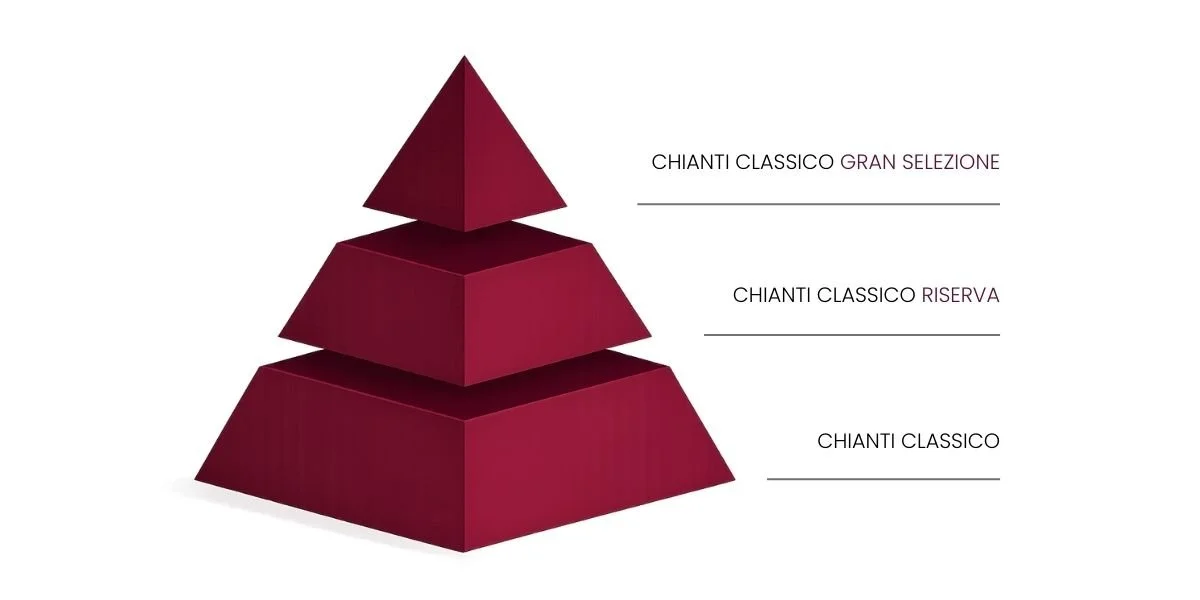
At the base of the quality pyramid is Chianti Classico, above it Chianti Classico Riserva, and at the top Chianti Classico Gran Selezione. These three levels differ in terms of minimum alcohol content, aging time, and specific production requirements. What they do not differ in, however, is a prescribed style or a defined vinification method. The rules therefore provide a clear framework—within this framework, it is up to the producer to decide how to age their wine and what finishing touches to give it.
And here's another little tip that often causes confusion:
When talking to winemakers or wine lovers, you often hear the term "Annata." This refers to the basic level. However, you won't find this word on the label itself—it only says Chianti Classico DOCG.
Chianti Classico DOCG – the accessible classic
When people think of Chianti Classico, they usually mean this category. The basic level is anything but simple—it clearly demonstrates what the region stands for.
Served slightly chilled, this red wine is not a "fireplace wine," but rather a wine to accompany food: pasta with tomato sauce, pizza, salumi, grilled vegetables, or simply a good piece of bread with olive oil—this is where it really comes into its own.
Chianti Classico
Aromas in the glass
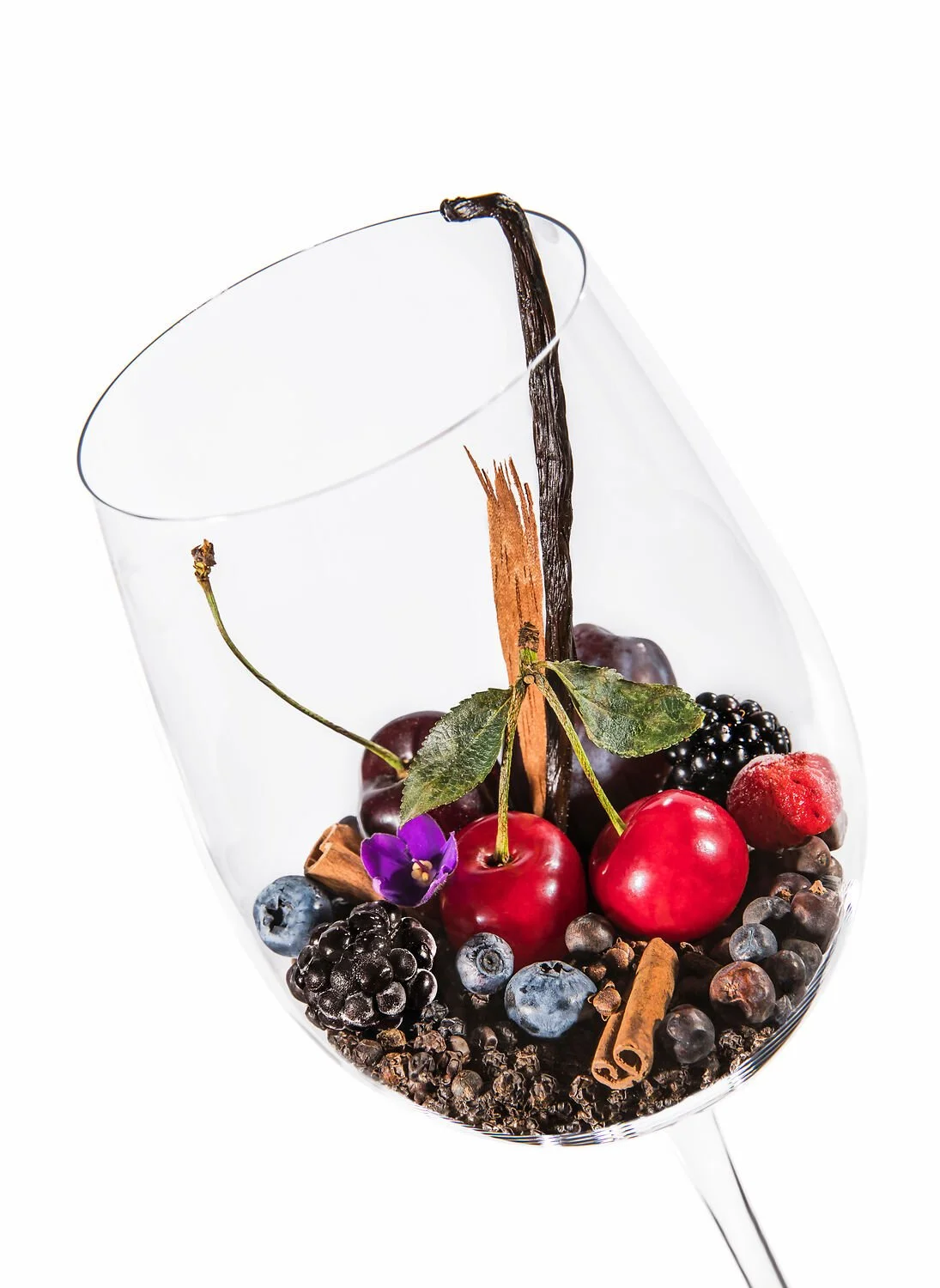
On the nose, Chianti Classico is lively and juicy, with fresh cherry aromas, subtle spice, and that typical, invigorating acidity that immediately makes you want to take another sip. The tannins are present but well integrated—they provide structure without being heavy. It is precisely this balance that makes this famous red wine from Tuscany so versatile.
The legal framework governing Chianti Classico DOCG is also clearly defined:
• At least 80% Sangiovese
• At least 12.0% alcohol
• At least 12 months of aging
These guidelines set the parameters. However, the final character of the wine is determined by the signature style of the respective winery.
Its aging potential should not be underestimated either: seven to ten years is often possible without any problems, sometimes even significantly longer.
Chianti Classico Riserva DOCG – more maturity, more depth
In this second stage of the pyramid, time and selection play a decisive role. More time in the barrel, more time in the bottle—and in many cases, an even more careful selection of particularly ripe grapes. Even in the vineyard, more precise decisions are made about which grapes will later become Riserva.
Overall, a Chianti Classico Riserva DOCG is more powerful than the basic level, without losing the elegance of Sangiovese.
Chianti Classico Riserva
Aromas in the glass
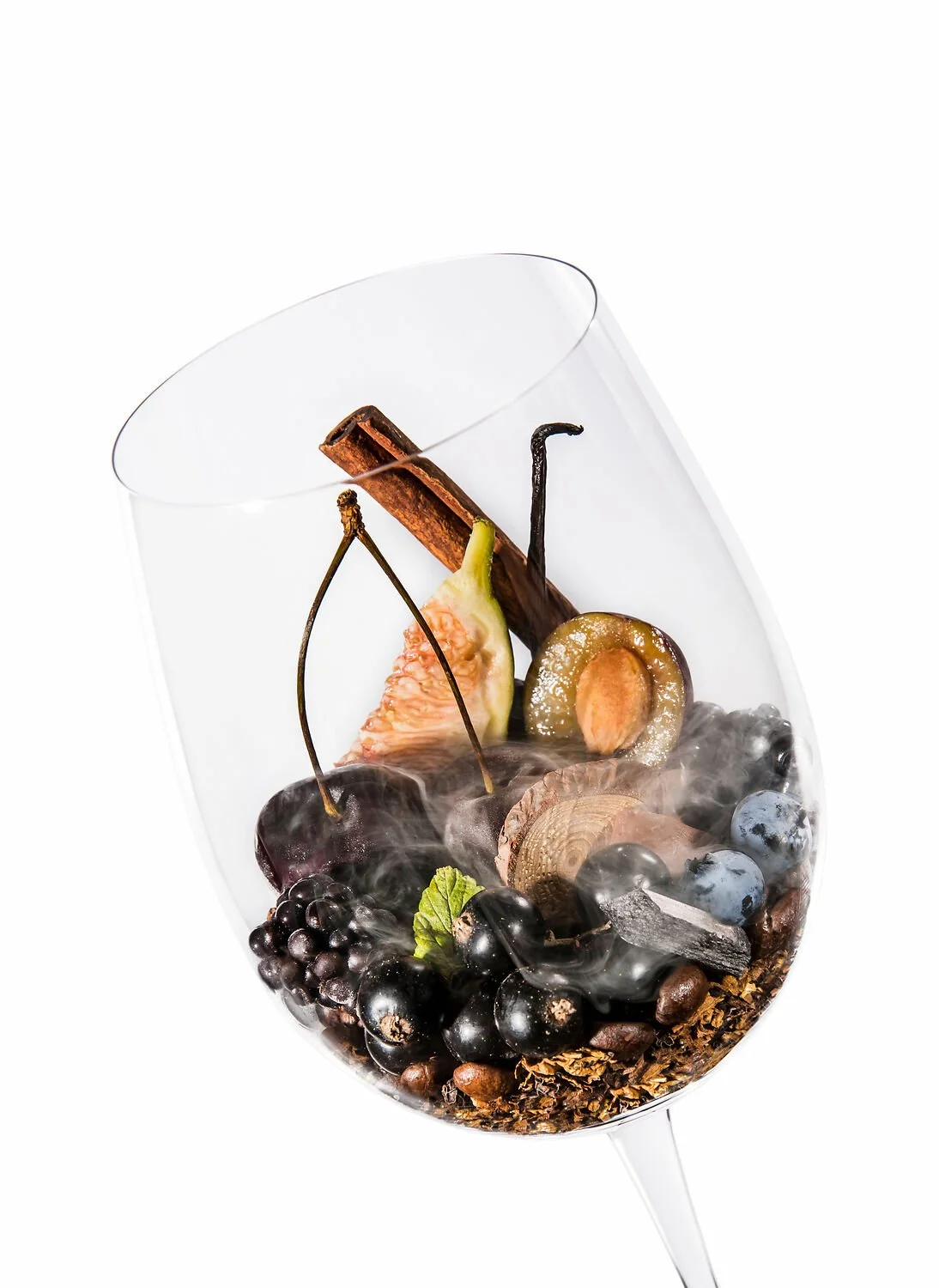
Chianti Classico Riserva has a distinctly ripe fruit aroma. Aromas of ripe cherries are at the forefront, accompanied by darker fruits such as plums, blackberries, and blueberries. These are complemented by spicy notes, often reminiscent of juniper and black pepper.
These wines usually have a dense structure. The acidity and tannin framework is fine-grained and elegant and well integrated.
The legal framework governing Chianti Classico Riserva DOCG is also clearly defined:
• At least 80% Sangiovese
• At least 12.5% alcohol
• At least 24 months of aging, including at least 3 months of bottle aging
In terms of aging potential, Chianti Classico Riserva DOCG usually exceeds the basic level. Ten to fifteen years are not uncommon, and with the right vintage and producer, significantly more is also possible.
Chianti Classico Gran Selezione DOCG – Origin at the highest level
Chianti Classico Gran Selezione DOCG is at the top of the quality pyramid. As the newest category of Chianti Classico, it places the strongest emphasis on origin and selection.
This is not simply a matter of longer maturation times or greater strength. Rather, the focus is on the conscious selection of particularly suitable vineyards. The grapes often come from clearly defined plots or are subject to even stricter selection. The aim is to showcase the potential of a winery—and a very specific location—with particular precision in the glass.
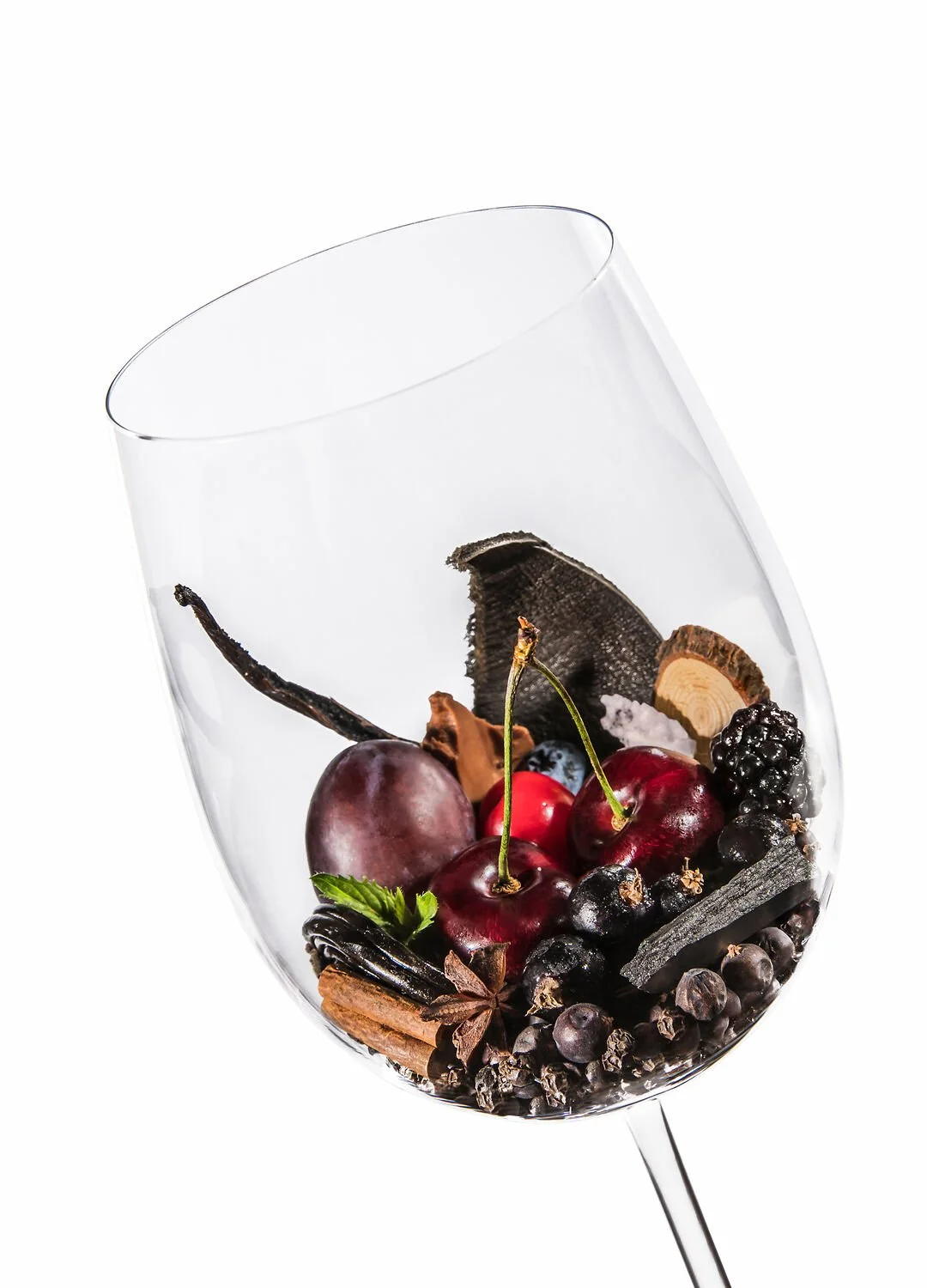
Chianti Classico Gran Selezione
Aromas in the glass
The nose reveals clear, fruity aromas. Dark cherries dominate, along with plums, blackberries, and blueberries. These are complemented by spicy nuances of juniper, pepper, cinnamon, and licorice, combined with woody aromas such as vanilla.
Overall, Chianti Classico Gran Selezione is well-structured and elegant. The acidity is lively and precise, and the tannins are fine and tightly knit, with depth and length.
With a legal amendment that came into force on July 1, 2023—based on a decision by the Consorzio Chianti Classico in June 2021—the requirements for Gran Selezione were further clarified. Since then, the following has applied:
at least 90% Sangiovese
the remaining maximum 10% may consist exclusively of approved indigenous grape varieties
International grape varieties are no longer permitted in Gran Selezione.
at least 13.0% alcohol
At least 30 months of aging, including 3 months of bottle aging
exclusively grapes from our own vineyards
Up to and including the 2022 vintage, the minimum proportion was 80% Sangiovese, and the remaining proportions could also include international grape varieties such as Cabernet Sauvignon or Merlot. The new regulation has further strengthened the role of Sangiovese and placed a clearer focus on regionally rooted varieties.
As part of this reform, it is now also possible to indicate the so-called UGA (Unità Geografiche Aggiunte) on Gran Selezione wines. These additional geographical units allow for an even more precise indication of origin within the Chianti Classico area. Gran Selezione wines that have been on the market since July 2023 are allowed to carry this designation on the label. Currently, this option applies exclusively to the Gran Selezione category.
🎧 Listening tip from my podcast: In conversation with Giovanni Manetti
In June 2021, immediately after the decision to revise the Gran Selezione regulations, I had the opportunity to interview Giovanni Manetti, president of the Consorzio Chianti Classico, in person. In this podcast episode, we discuss the background, motivation, and vision behind the reform.
👉 Podcast episode: Giovanni Manetti—a conversation about the new milestone in Chianti Classico
Despite the clearly defined legal framework, there are no regulations governing the vinification method. A Chianti Classico Gran Selezione can be aged in large wooden barrels, barriques, cement or steel. It can be powerful and dense – or fine and elegant. The terroir and the producer's signature remain decisive factors.
The storage potential is usually highest and often ranges from 15 to 20 years or significantly more.
Chianti Classico Gran Selezione is therefore less a question of "more" and more a question of precision—and of clear origin in the glass.
A Fact Sheet - Short and Sweet
🍷 My tip for you
The quality levels help you get your bearings—especially when it comes to maturity, structure, and aging potential. But they don't decide which wine is right for you.
Ultimately, for me, the category is just a framework. The decisive factor is which wine is best suited to your table—and to the moment.
Supertuscans: How an artificial concept changed the world of wine
The term "Supertuscans" arose from a minor revolution—and a genuine dilemma.
At the end of the 1970s and increasingly in the 1980s, some winegrowers in Tuscany began to deliberately deviate from the production regulations of the time. Not out of provocation, but out of conviction. Those who did not follow the rules had to declare their wine as Vino da Tavola. For Italians, this was a perfectly normal term – but internationally, it was synonymous with simple mass-produced goods. And that was precisely the problem.
While knowledge about yield reduction and cellar technology grew, white grape varieties were still mandatory for Chianti Classico. Some producers therefore decided to go their own way. The result was:
single-varietal Sangiovese wines
Blends with international grape varieties
powerful, outstanding quality wines
The paradox: often these were the best wines from a winery—but legally they were "table wine."
The international press sought a solution and coined the term "Supertuscan"—an unofficial artificial word for top Tuscan wines outside the DOCG rules. In 1994, Italy responded by introducing the IGT category, thereby creating a more appropriate legal basis. However, the name "Supertuscan" remained—until today.
Today, the focus in Chianti Classico is once again clearly on Sangiovese and origin. International grape varieties play a lesser role. In my opinion, this phase was not a mistake, but a necessary step. It brought new self-confidence, greater precision, and ultimately a quality offensive for the entire region.
Supertuscans have their place. But for me, the true soul of Chianti Classico lies in the Sangiovese grape itself.
Sangiovese: Why this grape variety is the heart of Italian red wine
Sangiovese is Italy's most widely grown red wine grape variety—and shapes the character of the great wines of central Italy like no other. When people talk about Chianti Classico, they are essentially talking about Sangiovese. But its significance extends far beyond that.
Brunello di Montalcino, Vino Nobile di Montepulciano, and Morellino di Scansano are also based on Sangiovese. Even many of the so-called Super Tuscans contain it—sometimes as a single variety, sometimes as a defining component in a cuvée.
Sangiovese is not just a grape variety from Chianti Classico.
Sangiovese is a piece of Italian wine culture.
What makes Sangiovese so special is less its volume than its expression. It is not a grape variety that seeks to mask or dominate everything else. Instead, it conveys its origins. Soil, altitude, microclimate—all of these factors are clearly reflected in the wine. Hardly any other Italian red wine variety reacts so sensitively to its environment.
This is precisely why it is ideal for regions such as Chianti Classico. In the hills between Florence and Siena, it finds conditions that balance structure and freshness. In Montalcino, it shows more power and depth, while in Montepulciano it displays a different nuance of elegance.
🍷 My tip for you
If you would like to delve deeper into the history, stylistic differences, and special characteristics of this grape variety, you can find more information in my detailed blog article, in which I take an in-depth look at Sangiovese.
👉 Blog article: Sangiovese – The red ruler among Italy's grape varieties
Sangiovese adapts—without losing its identity
This characteristic makes it demanding. It requires precise work in the vineyard and sensitivity in the cellar. If it is treated roughly, it shows immediately. With patience and respect, it develops impressive clarity and depth.
Perhaps that is precisely where its greatness lies:
Sangiovese does not impose itself. It demands attention—and rewards it.
🎧 Listening tip: My podcast on Sangiovese
If you want to delve deeper into the subject, I recommend a very special episode of my podcast. In it, I talk in detail about the history, character, and significance of this grape variety—and why, for me, it is much more than just the basis of Chianti Classico.
👉🏻 Podcast episode: Sangiovese – the red ruler among Italy's grape varieties
So what does Chianti Classico really taste like?
Chianti Classico cannot be reduced to a single flavor—that is precisely what makes it so exciting. Its great strength lies in its diversity. Soil, altitude, sun exposure, microclimate, aging—all of these factors noticeably alter its aroma. And that is why it is difficult to pin it down in three sentences.
The common foundation
Typical are fresh, clear fruit aromas—often cherry, sour cherry, plum, and red and dark berries. These are accompanied by spicy notes such as pepper or juniper, sometimes with a hint of citrus freshness.
On the palate, Chianti Classico usually displays lively acidity, a supportive structure, and prominent but well-integrated tannins. What surprises many is that it often appears juicy, lively, and surprisingly elegant. It is a wine that often makes you think, after the first sip: I'll have another.
Aging in wooden barrels is not a must, but rather a stylistic device. No quality level prescribes a specific type of aging. The wine may be aged in large wooden barrels, barriques, tonneaux, cement, or exclusively in tanks. Wood should accompany, not dominate. It can add subtle spicy notes, a hint of vanilla, or extra depth—but it must not mask the cherry fruit and elegance of Sangiovese. While the use of wood was often very prominent in the 1990s and early 2000s, many producers today work more consciously and cautiously to bring the origin and fruit more to the fore.
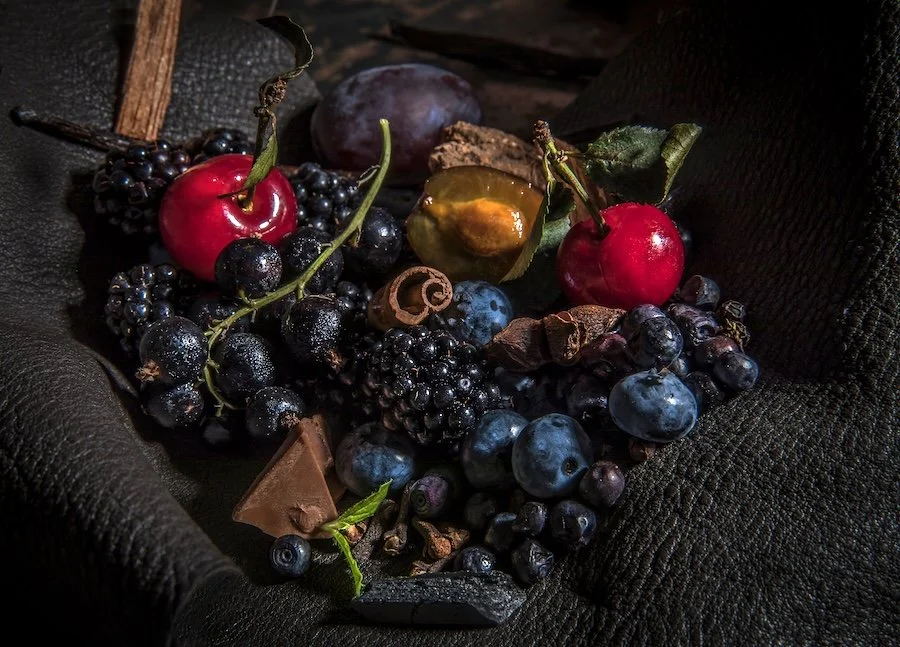
The web of acidity and tannin
The typical mouthfeel is firm and juicy at the same time. The acidity provides freshness, while the tannins form the backbone. These two elements are particularly important in Sangiovese—they give the wine tension, length, and character.
I like to describe this interplay as a fine mesh. The tighter and more precisely woven this mesh of acidity and tannin is, the more elegant the wine appears. If it is coarse-meshed, it appears more angular and less harmonious. Nylon stockings are a good example of this: the finer the mesh, the more elegant they appear. The same applies to the tannin structure in Chianti Classico—the finer the mesh, the more subtle and precise the wine appears in the glass.
In the end, one impression remains: Chianti Classico is a fresh, structured, elegant red wine with clear acidity and supporting tannins. It is lively, stimulating, and makes you want to take another sip.
👉🏻 My recommendation for your selection
If you want to discover the different styles for yourself, you will find a carefully curated selection of various Chianti Classico wines in my online shop —from classic, fruit-forward styles to structured Chianti Classico Riserva or complex Chianti Classico Gran Selezione. For each wine, you will find my personal assessment, information about grape varieties, aging, and style—so that you not only buy, but also understand what you have in your glass.
Because ultimately, the same applies here: Chianti Classico cannot be understood theoretically—it must be experienced.
Good years, great years? Which vintages are worth buying?
The vintage shapes the style, structure, and maturity of a wine—but it is never the whole story. Climate has a big influence, but ultimately it is always people who decide what becomes of it. An excellent vintage can produce a mediocre wine. And with experience, good timing, and smart decisions, a difficult vintage can yield impressive results.
Many good wines are produced in good years. In challenging years, you can recognize the truly good winemakers. I like to call such years "winemaker vintages"—years that reveal who has mastered the fine art of timing and has the right instinct for the necessary ripeness of the grapes. Especially when the weather is uncertain during the harvest, experience and intuition come together—in the vineyard as well as in the cellar.
Not every vintage tastes the same—and that's exactly what makes it so exciting.
Hot years often produce more powerful, spicier wines with higher alcohol content and riper fruit.
Cooler or balanced years show more freshness, clarity, and often more precise fruit aromas.
Warm days and cool nights in late summer promote slow, balanced ripening and help to develop fruity, elegant, and well-structured wines.
Rainy periods during the harvest can produce lighter, very typical, and more delicate wines—provided that the right decisions are made in the vineyard.
And now comes the crucial point: which vintage is "better" depends largely on your personal preference. Do you like it powerful and spicy?
Or rather fresh, fruity, and precise?
The vintage is therefore less of a ranking and more a question of style.
🍷 My tip for you
If you would like to understand more about how individual vintages have developed in Chianti Classico, it is worth taking a look at the Consorzio Chianti Classico website. There you will find a very clear and detailed overview of the respective vegetation cycles—i.e., how the weather, ripening phase, and harvest progressed in each year.
These compilations are extremely helpful in better understanding differences in style and classifying vintages not only according to ratings, but also according to climatic conditions.
👉 Consorzio Chianti Classico: https://www.chianticlassico.com/en/wine/harvest/
Gallo Nero: What does the black rooster on the bottle mean?
The black rooster—the Gallo Nero—is the official symbol of Chianti Classico. When it appears on the bottle, the wine is guaranteed to come from the historic core region between Florence and Siena and meets the strict requirements of Chianti Classico DOCG.
So it is much more than just a logo. It is a mark of origin, a seal of quality, and a symbol of identity all at once. And perhaps you have already asked yourself: why a black rooster of all things? What does a rooster have to do with one of Italy's most famous red wines?
A medieval legend with consequences
The most charming explanation is a medieval legend surrounding the rivalry between Florence and Siena. Both city-states claimed the Chianti region as their own, and the border was disputed for a long time. According to tradition, an unusual solution was agreed upon to resolve the conflict: two horsemen, one from Florence and one from Siena, were to set off at sunrise. The border would run between the two points where they met. The crowing of the cock determined the starting point.
Siena chose a proud, well-fed white rooster. Florence chose a black rooster – but kept it hungry and in the dark. When it was released in the morning, it crowed much earlier than expected. The Florentine rider set off before sunrise and covered a large part of the distance. According to legend, this meant that most of the Chianti region fell to Florence. And the black rooster became the symbol of this historic gain in power.
Regardless of this tradition, the Gallo Nero is historically documented. As early as 1384, the Lega del Chianti, an administrative unit founded by Florence, used the black rooster as its heraldic animal. The symbol was therefore not only part of a beautiful story, but also an official sign of political affiliation.
To this day, the Black Rooster can be found in historic locations in Florence, including Palazzo Vecchio, the former center of power of the Republic of Florence. It was thus much more than a decorative emblem: it stood for influence, administration, and territorial order.
In 1924, the newly founded Consorzio Chianti Classico deliberately revived this historic symbol and made the black rooster the official symbol of the wine. Since then, the Gallo Nero has no longer stood for political power, but for origin and quality in the glass.
How to recognize genuine Chianti Classico
Today, it is the clear symbol of genuine Chianti Classico. When you see the black rooster on the bottle, you can be sure:
The wine comes from the precisely defined area between Florence and Siena.
It was produced according to the specifications of the Chianti Classico DOCG.
Sangiovese is the dominant grape variety (at least 80%).
And very important: a Chianti DOCG does not bear the Gallo Nero symbol. Only Chianti Classico is allowed to use this symbol.
The black rooster is thus more than just a pretty detail on the label. It is a visible promise—of origin, history, and identity. A small symbol with great significance.
🍷My tip for you
If you want to experience the legend in even more vivid detail, my in-depth blog article on Gallo Nero not only provides a more detailed explanation of the background, but also includes a link to the short film by Consorzio Chianti Classico.
👉 Blog article: The Black Rooster - The symbol of Chianti Classico
Why Chianti Classico is a wine for dining—and which dishes pair well with it
For me, Chianti Classico is a wine to accompany food. Not because you can't enjoy it on its own, but because it really comes into its own at the table. Its fruitiness, lively acidity, and pronounced, fine tannins provide exactly the right amount of excitement that a dish needs.
Acidity acts as a burst of freshness. Fat—whether from olive oil, butter, or meat—requires this counterpoint. The acidity brings back lightness, the tannins provide structure, and the fruit ties everything together. It is precisely this interplay that makes Chianti Classico so lively at the table.
I like it when something happens while eating. When little corners and edges appear, when wine and food speak to each other. Very gentle, completely smooth wines often seem arbitrary alongside strong dishes. Chianti Classico, on the other hand, gets involved—and that's exactly what makes it so exciting.
When heritage and cuisine come together
A prime example is pappardelle al cinghiale—wide noodles with slow-cooked wild boar ragout, seasoned with juniper and herbs. Wild boar live in the forests of Chianti Classico, and juniper grows everywhere here. And it is precisely these flavors that are often found in the wine. Fruit, spice, structure—everything comes together. For me, this is pure soul food.
But Chianti Classico can do much more. It goes just as well with pasta with tomato sauce as it does with salumi, grilled dishes, or braised meat. Personally, I like to pair Bistecca Fiorentina with Chianti Classico Riserva or Chianti Classico Gran Selezione—they bring the extra depth that such a cut of meat deserves.
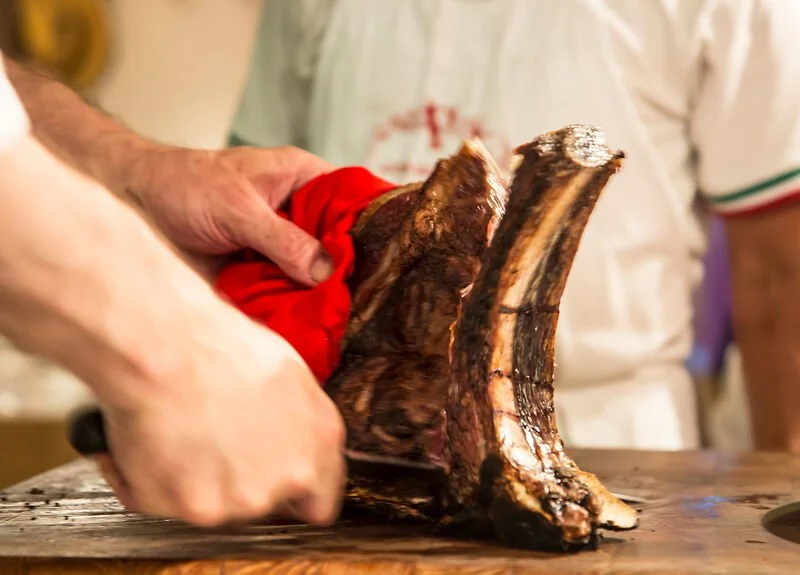
Florentine steak
Bistecca alla Fiorentina is arguably the most famous cut of meat in Tuscany: a substantial T-bone steak, grilled to perfection and allowing the flavor of the meat to shine through.
And sometimes it can be surprising: a young, fruity Chianti Classico can go wonderfully with grilled fish when roasted aromas and strong accompaniments are involved. It's not the color of the wine that matters—it's how the dish is prepared.
As a little guidance from my experience:
Chianti Classico – ideal with fresh, uncomplicated dishes
Chianti Classico Riserva – wonderful with grilled meats and hearty dishes
Chianti Classico Gran Selezione – perfect with slow-cooked, intense dishes
But in the end, it's always your own taste that counts. And that's exactly where the appeal lies.
🍷 My tip for you
By the way, you can find many of my favorite Tuscan recipes on my blog. If you feel like trying your hand at some classic Tuscan dishes, feel free to take a look. I hope you enjoy cooking them—preferably with a glass of Chianti Classico of your choice, of course. It doesn't matter which category it's from. The important thing is that it suits you.
👉 Blog category: Tuscany on your plate
Between Florence and Siena: What makes this area so special
Chianti Classico belongs to the provinces of Florence and Siena. Florence forms the northern border of the region, while Siena forms the southern border. In between lies a landscape that seems tailor-made for wine.
The area covers around 70,000 hectares, of which
approximately 70% forest
around 10% of vineyards
approximately 15% olive groves
the rest is a cultivated landscape
Vineyards emerge between forests, cypress trees add striking accents. Olive groves are a defining feature of this landscape. Their silvery-green shimmer changes the picture—in summer as well as in winter. They bring light to the hills and are as much a part of Chianti Classico as the vineyards.
In between are stone houses, wineries, and old castles on hilltops. Many date back to a time when this area was fiercely contested: Castello di Brolio, Castello di Meleto, and Castello di Cacchiano. Today, they are silent witnesses to an eventful history.
Despite all the development, the overall picture still looks harmonious today. Building regulations are strict, and much has been restored rather than replaced. You can sense that this area has grown over centuries.
The Chiantigiana – a road through the heart of the region
If you want to experience this landscape, you should take the SS 222 – the Chiantigiana. This road connects Florence with Siena and leads right through the wine-growing region. Coming from Florence, the landscape initially appears somewhat more open. But almost imperceptibly, the hills become more numerous. The road becomes more winding, offering ever-changing views, with forests alternating with olive groves and vineyards.
From Greve in Chianti onwards, the typical Chianti landscape becomes increasingly apparent. Around Castellina in Chianti and Fonterutoli, the view suddenly opens up into the distance. Siena can be seen in the distance.

Along the Chiantigiana: view of Castello di Fonterutoli, with Siena in the background
Altitude, climate, and the character of the wines
The landscape of Chianti Classico is characterized by constant ups and downs. Hills follow hills, valleys alternate with ridges. The vineyards are therefore mainly located on slopes, mostly between 250 and 600 meters above sea level. These altitudes shape the climate of the region. The days can be warm and sunny, but it cools down significantly at night. These temperature differences help the grapes to retain their freshness and aroma.
The region's high proportion of forest also plays an important role. The large forest areas act as a natural temperature buffer. They cool the landscape and ensure that the climate feels more balanced even on warm days. Especially today, in the context of climate change, this effect is an important advantage for viticulture.
Ultimately, it is this interplay of landscape, altitude, forest, and temperature differences that gives Chianti Classico wines their characteristic style.
Sustainability as part of the landscape
Sustainability shapes not only the work in the vineyards in Chianti Classico, but also the landscape itself. Anyone walking attentively through the vineyards will quickly notice that there is more life to be seen here again: herbs and flowers grow between the rows of vines, and insects and birds are much more common. But you may also encounter wild boars, badgers, and foxes. Flora and fauna have become a visible part of this cultural landscape.
Panzano in Chianti played an important role in this development. The idea of a so-called bio-district originated here early on. Around 25 years ago, many businesses switched to organic farming and jointly committed themselves to sustainable methods. Today, 90% of Panzano's vineyards are farmed sustainably.
This model became an example for many other businesses in the region. Today, more than half of the wineries in Chianti Classico are certified organic, and many others operate sustainably. The soil is increasingly understood as a living organism—not just a production area.
When the light falls over the hills
And then there's the light.
It feels soft and warm, especially in the early morning and evening. The silvery shimmering leaves of the olive trees catch it, young vine leaves let it shine through, and the hills stand out clearly against the sky. You want to breathe in the landscape as a whole.
There isn't just one perfect viewpoint—there are many. A hill above a vineyard, a view over the valleys. A walk through the forest, and suddenly, at the edge of the woods, a view of a medieval village opens up. But often it's simply the drive from point A to point B that offers ever-changing perspectives.
A friend once said to me, "Sometimes it's so beautiful here that it almost hurts."
And that's exactly the feeling that remains.
👉🏻 My recommendation for you
Are you curious now? Then let's not just discuss it in theory—let's experience it together.
Come here to Chianti Classico for a day. We will visit selected wineries, talk to the people behind the wines, stand among the vines and hills, and taste the wines where they are made. And, of course, we will also enjoy the cuisine that goes with this wine. A day up close and personal: with the landscape, the wines, and the people. And hopefully with many moments that will stay with you.
👉🏻 You can find all the information here: On tour with Nina in Chianti
Soils, forests, altitudes – how landscape shapes flavor
Chianti Classico does not taste the same everywhere—and that is precisely because of its landscape. Altitude, forest cover, soil types, exposure, and microclimate all interact here. This interplay is called terroir. And in Chianti Classico, this terroir is astonishingly diverse.
In conversations with winemakers, the same principle comes up time and time again: good wine starts in the vineyard—and three things are needed for good results: good soil, the right orientation, and the right altitude.
The floor – the foundation
Millions of years ago, Chianti was the seabed. Many of the eleven soil types are of marine origin. Limestone, marl, sandstone, and clay were formed underwater—and today shape the vineyards.
In simple terms, a few basic trends can be identified:
Calcareous soils (e.g., Alberese) often bring more freshness, lively acidity, and a clear structure to the glass.
Galestro-rich, schistose soils often produce structured, long-lasting wines with a mineral character (e.g., Formazione di Sillano).
Sandy formations usually have a more elegant and refined aroma (e.g., Macigno).
Loamy and clayey soils often produce more powerful, darker, and fuller wines (e.g., Pietraforte).
These differences alone already create an enormous range.
The orientation—how much sun is too much?
The exposure, i.e., the orientation of the vineyards, plays an equally important role. In the northern hemisphere, south-facing slopes have long been considered ideal because they get plenty of sun throughout the day. However, with summers becoming increasingly hot, this view is changing somewhat. In very warm years, constant sunlight on south-facing slopes can severely impair the quality of the grapes. Southeast or southwest exposures are therefore becoming increasingly important because they receive sufficient sun but are not exposed to the most intense heat throughout the day. A little shade at the right time can actually be a quality advantage today.
And then, in conversations, you suddenly hear something that would have been unimaginable a few years ago: in some cases, even north-facing slopes are being planted—often with white wine varieties—in order to deliberately produce fresher, cooler styles. These are not widespread developments, but rather isolated decisions. However, they clearly show how much thinking in the vineyard is shifting as a result of climate change.
Height – a decisive factor
In addition to soil and orientation, altitude also plays an important role. In Chianti Classico, many vineyards are located between approximately 250 and 600 meters above sea level—and these differences are by no means insignificant.
Higher altitudes benefit from cooler nights. They help to preserve acidity and freshness, and the fruit often appears more precise and clearer. In lower, warmer areas, on the other hand, darker aromas and a softer structure often emerge. Around Monte San Michele—at 893 meters, the highest point in the area—particularly firm, fresh wines are produced. Places such as Radda in Chianti and Lamole benefit from this altitude. San Casciano in Val di Pesa, on the other hand, which is closer to Florence and lower in altitude, is one of the warmer areas of Chianti Classico. This is why a Chianti Classico from Radda tastes different from one from San Casciano – even though both are made from 100% Sangiovese.
And then there is the forest. Around 70 percent of the area is covered in woodland. These forests act as natural climate regulators. They lower temperatures, store moisture, and ensure air circulation. Vineyards near the edge of the forest often benefit from cooler conditions—and this is often reflected in particularly clear, lively fruit.
Terroir is therefore not a romantic term. It is the sum of soil, orientation, altitude, light, wind, and microclimate. Two vineyards just a few hundred meters apart can have completely different conditions.
And then there is another decisive factor: people. Terroir provides the framework. The winemaker shapes the wine from it. And it is precisely in this area of tension that the impressive diversity of Chianti Classico emerges.
🎧 Listening tip: My podcast about the weather in Chianti
In addition to soil, exposure, and altitude, the weather ultimately plays a decisive role—often more than one might think. In my podcast episodes with Piero Lanza from 2021, especially in the conversations shortly before and after the harvest, you will gain fascinating insight into precisely this interplay. It is not without reason that I consider Piero to be my "weather guru."
👉🏻 Podcast episode: A "weather update" shortly before harvest with Piero Lanza from the Poggerino winery
👉🏻 Podcast episode: From harvest to the end of the year – the weather in Chianti with Piero Lanza
Chianti Classico on the World Stage – How an Image Problem Turned into a World-Class Wine
Chianti Classico is historically one of the oldest defined wine regions in the world—and yet it had to fight long and hard for its image.
As early as 1716, Grand Duke Cosimo III de' Medici officially defined the boundaries of the Chianti region. This makes the region one of the first legally defined wine-growing areas in Europe. In 1924, 33 producers founded the Consorzio Chianti Classico, in 1932 the addition "Classico" was introduced, and in 1984 DOCG status followed. The history is great—but for a long time, the image was not.
From farm wine to bast bottle
In the 1960s, 70s, and early 80s, Chianti Classico was widely regarded as a simple, often thin red wine. At that time, a proportion of white grape varieties was mandatory, which further weakened the structure. Many wines appeared acidic, angular, and lacking in depth.
And then there was the famous fiasco – the bast bottle. Covered in straw, it could be found in pizzerias around the world, on checkered tablecloths, in Italian restaurants across the globe. The wine was inexpensive, uncomplicated – but rarely sophisticated. The straw did have a practical purpose, however: in times before modern refrigeration, the bottles were placed in water. The raffia absorbed the water, and evaporation created a cooling effect. So it was not just decoration, but also functional. Nevertheless, the image stuck: rustic, simple, not very prestigious.
The quality turnaround
The change began in the late 1960s and 1970s. Winemakers such as Piero Antinori—together with oenologist Giacomo Tachis—questioned the status quo. They reduced yields, worked more precisely in the vineyard, modernized cellar technology, and experimented with international grape varieties such as Cabernet Sauvignon and Merlot. At the same time, the bast bottle disappeared and was replaced by the Bordeaux bottle—a clear signal to the international wine world.
This phase was part of the movement that also gave rise to the so-called Super Tuscans. It was all about one simple question: what is possible when you focus uncompromisingly on quality? At that time, international grape varieties helped to round off the sometimes harsh structure of Sangiovese. They brought color, density, and softer tannins—an important intermediate step in the development.
Since the 2000s, the winery's self-image has changed once again. Today, the focus is clearly back on Sangiovese—but with significantly more knowledge, better clones, more precise work in the vineyard, and modern cellar technology.
Gran Selezione was introduced in 2013, followed by UGA (Unità Geografiche Aggiuntive) in 2021. Both steps represent a clear goal: to define origin even more precisely and to further develop quality in a structured manner.
Internationally recognized – with a long memory
Today, Chianti Classico is exported to around 160 countries. The US is the most important market, followed by Italy and Canada; Germany also plays a role. It enjoys great recognition among international experts. And yet some old perceptions persist: too much acidity, too harsh tannins, rustic. Anyone who thinks this way has probably not tasted a really good Chianti Classico in a long time.
The developments of recent decades were necessary. Without the revolution of the 1970s, Chianti Classico would not be where it is today. And without the conscious return to Sangiovese, its identity would not be so clear. Today, it combines history, structure, and origin with international standards—and that is precisely what makes it a world-class wine.
🍷 My tip for you
How about ending with a little break in Tuscany—without having to pack your bags?
The Consorzio Chianti Classico website offers fascinating 360-degree panoramas from different corners of Chianti Classico. Ideal for a few minutes of scenery, space, and inspiration in front of your screen.
👉 Consorzio Chianti Classico: 360-degree panoramic images (you will be directed to the page via "UGA" and then be sure to scroll down)
How to recognize a good Chianti Classico—and make the right choice
We have discussed history and image, origin, terroir, quality categories, and vintages. Now let's get down to specifics: You are standing in front of the shelf or sitting in a restaurant with the wine list in your hand—what should you look for?
Here are a few points that I personally pay attention to first:
Is it really Chianti Classico?
Look for the black rooster, the Gallo Nero. It is either on the front of the bottle neck or on the back label. If it is missing, it is not Chianti Classico.What vintage is it?
Am I curious about this year? Have I had good experiences with it in the past? Maybe it's even one of my favorite vintages—or one from which I've already tried several good wines. The vintage is always a conscious factor for me.Who is the producer?
Do I know the winery? If not, it's worth taking a look at the back label. It tells you who produced and bottled the wine. Sometimes it is a clear company name, sometimes just a registration number. This number officially identifies the bottler and is often—though not always—an indication of larger companies with higher production volumes. That does not automatically mean lower quality, but it is information that I take note of.What additional information can I find?
Some producers voluntarily provide information about the grape varieties used or even about individual vineyards. This is not mandatory—but when I get this transparency, I am happy about it.And yes, your gut feeling can also play a role. If a label appeals to you, if you like the design and everything else seems right to you—why not? There is a conscious decision behind every label. Often it says more about the personality of the winery than you might think at first glance.
But in the end, it's not the label that matters—it's what happens in the glass.
How is quality reflected in the glass?
For me, it all starts with the aroma. When I smell cherries—juicy, precise, sometimes accompanied by plums and a subtle spiciness—then I take notice. Sangiovese is not overpowering. It is not a grape variety that overwhelms. It unfolds—layer by layer.
On the palate, I want lively, well-integrated acidity, tannins that provide structure without dominating, and that wonderful feeling of smoothness. A Chianti Classico can have backbone, yes—but it shouldn't be strenuous. It should make you want to take another sip.
The higher the proportion of Sangiovese, the more clearly this elegance comes through for me. Personally, I love 100% Sangiovese because that's where the origin is most clearly discernible.
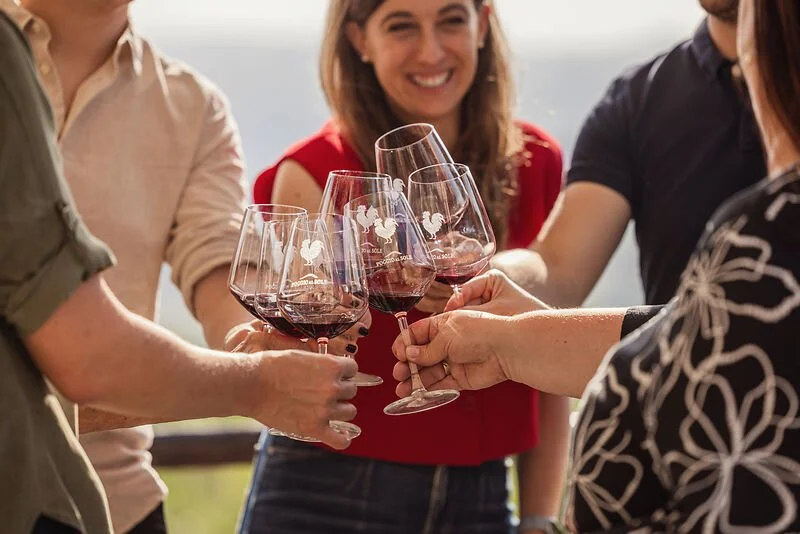
Balance instead of overlap
I hardly ever encounter wines that are truly flawed. Of course, the classic cork taint can occur—and natural cork is required by law for Chianti Classico DOCG. This means that it is not a manufacturing defect, but rather a material risk associated with this traditional type of closure.
What I do consider a stylistic mistake, however, is a lack of balance. Up to 20% of other grape varieties are permitted—which can be exciting. But if they overwhelm the Sangiovese, the wine loses its identity. It becomes interchangeable.
The same applies to wood. It can add depth, build structure, and accompany the wine—but it should never be louder than the grape variety itself. A good Chianti Classico shows that it is made from Sangiovese grapes and that it comes from this specific region.
My advice for getting started
If you are just starting out, go for a Chianti Classico DOCG – without Riserva or Gran Selezione. The basic quality often reveals the most honest signature of a winery.
A good vintage—such as 2021 or 2023—can help because many balanced, very harmonious wines were produced overall.
And then I recommend: open it, try it, compare it. And hopefully enjoy it.
Long live Chianti Classico.
🍷 And if you want to dive even deeper...
If you enjoyed this insight, please stay in touch with me. In my newsletter, I regularly share new blog articles, podcast episodes, and personal insights into the world of Chianti Classico—informative, insightful, and always heartfelt.
I would be delighted if we could stay in touch.
You can sign up for my newsletter here: Newsletter – 3 minutes of Tuscany feeling for you
Chianti Classico – brief answers to the most important questions
-
Chianti refers to both a historic region in Tuscany and a larger DOCG appellation. Chianti Classico, on the other hand, comes exclusively from the clearly defined core area between Florence and Siena.
A Chianti DOCG can come from surrounding areas of Tuscany. A Chianti Classico DOCG must come from the historic region of origin and bears the black rooster (Gallo Nero) on the bottle as a distinguishing mark.
-
Yes. The designation is reserved exclusively for red wine.
It is based on at least 80% Sangiovese grapes. Depending on the quality level, the proportion may even be higher. White or rosé wines may not be labeled as Chianti Classico.
-
There are three quality levels in Chianti Classico:
Chianti Classico DOCG
Chianti Classico Riserva DOCG
Chianti Classico Gran Selezione DOCG
They differ mainly in terms of minimum alcohol content, aging time, and production requirements. Gran Selezione is at the top of the quality pyramid and is subject to the strictest requirements.
-
A "good" vintage depends heavily on personal taste.
Warm years often produce more powerful, spicier wines with ripe fruit. Cooler or balanced years often show more freshness, clarity, and more precise aromatics.
Generally speaking, very good climate years produce many well-balanced wines, while more difficult years allow particularly experienced winemakers to demonstrate their strengths.
-
It features the Black Rooster—the Gallo Nero—on the bottle.
In addition, the label always bears the words "Chianti Classico DOCG." If the black rooster is missing, it is not Chianti Classico, but Chianti from another appellation.
-
The storage potential depends on the quality level and the vintage.
It can often be aged for seven to ten years. Riserva wines are typically aged for ten to fifteen years. Gran Selezione wines can be cellared for 15 to 20 years—or significantly longer—depending on their structure and vintage.
-
Chianti Classico must consist of at least 80% Sangiovese.
The remaining maximum 20% may consist of approved red grape varieties. In the Gran Selezione category, at least 90% Sangiovese has been mandatory since the 2023 reform, and international grape varieties are no longer permitted.
-
No, there's no specific type of finish that's required.
The wine may be aged in large wooden barrels, barriques, cement, or stainless steel tanks. The quality levels define minimum aging periods, but not the specific vinification method.
-
"Annata" is the colloquial term for the basic level of Chianti Classico.
However, the label only says "Chianti Classico DOCG." The term Annata is mostly used in conversations among winemakers or wine lovers.
-
White wines are also produced in the Chianti Classico region.
However, they may not be labeled as Chianti Classico. The designation "Chianti Classico DOCG" is reserved exclusively for red wine.
-
UGA stands for "Unità Geografiche Aggiuntive."
These are additional geographical units within the Chianti Classico area. Since 2023, they may only be used on wines in the Gran Selezione category and serve to indicate the origin even more precisely.