What's the difference between Chianti and Chianti Classico?
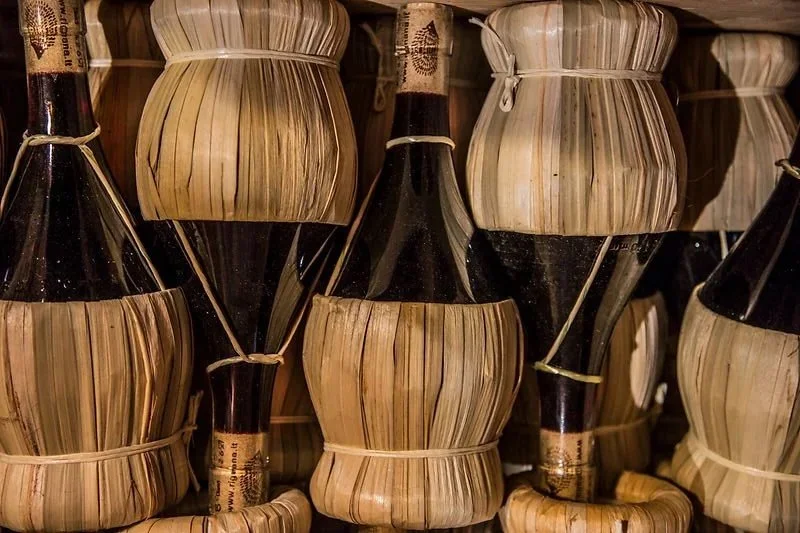
The terms Chianti and Chianti Classico often cause confusion and are frequently lumped together. "Bring me a glass of Chianti!" – "I'm vacationing in Chianti this summer!" – "Yesterday our friends served us a glass of Chianti Classico – mmm!" Sounds similar, right?
But actually, each of these sentences has a different meaning. The difference is clearly defined – and every wine lover should know it. But don't worry, it's not rocket science! With a few basics, you'll get it right away.
“Chianti is a geographically defined area within Tuscany. Only wine from this area, produced under specific conditions, may be called Chianti Classico and is recognizable by the “Black Rooster”. However, Chianti is also a red wine produced in several areas of Tuscany, but not in the Chianti area.” Nina in Chianti
No More Confusion: Chianti and Chianti Classico
But let's start from the beginning. What's crucial is the origin – and that's exactly where the fundamental difference lies. Let's take a look together and dive deeper into the home of Chianti Classico.
Origin of Chianti Classico DOCG - Great Tradition from a Small Area
Only red wines made in the Chianti area, following certain rules, can be called “Chianti Classico”.
“Chianti” refers to the geographical region in Tuscany, bordered by Florence to the north, Siena to the south, the Elsa and Pesa rivers to the west, and the Arno Valley to the east. The northern part belongs to the province of Florence, and the southern part to Siena. Overall, the Chianti area covers 71,800 hectares.
The Chianti Classico climate is continental, meaning warm summers and cool, damp winters. Most vineyards sit between 300 and 700 meters high – any higher, and the grapes just don't ripen properly for good wine.
The symbol for Chianti Classico is the 'Black Rooster' (or 'Gallo Nero'). If you see the Gallo Nero on the bottle, you know it's real Chianti Classico inside. So, it's super easy to spot!

Source: Consorzio Vino Chianti Classico
Where Chianti DOCG Comes From - A Big Region with Lots of Variety
Red wines labeled “Chianti DOCG” are made in six Tuscan provinces: Florence, Siena, Arezzo, Pisa, Pistoia, and Prato. If a wine comes from one of the seven sub-zones, it'll also have that zone's name on the label:
Chianti Colli Aretini
Chianti Colli Fiorentini
Chianti Colli Senesi
Chianti Colline Pisane
Chianti Montalbano
Chianti Montespertoli
Chianti Rufina
This huge wine region is full of rolling hills, olive groves, and vineyards. Geologically, it's made up of different hill ranges and valleys, with most vineyards sitting between 200 and 400 meters high. The nearby Tyrrhenian Sea really affects the climate here. Overall, it's a continental climate with hot, dry summers and cold, damp winters.

Source: Consorzio Vino Chianti
Chianti Classico vs. Chianti: Let's Dive Deeper!
So, we now know that where a wine comes from – and that includes its terroir (things like soil, climate, sun exposure, and how high up the vineyard is) – plays a super important role. Tuscany's long winemaking history has led to all sorts of different wine styles, ideas, and even the use of various grape varieties. This is how different types of wine with their own specific production rules came about.
Rules for Making Chianti Classico DOCG
Grape Varieties & How Chianti Classico DOCG is Made
You have to use at least 80% Sangiovese, but you can go up to 100%. For Chianti Classico Gran Selezione DOCG, starting with the 2020 vintage, it's a minimum of 90% Sangiovese, and only up to 10% of local, native grape varieties can be added.
Up to 20% can be added from local or international red grape varieties (but there's an exception for Chianti Classico Gran Selezione starting with the 2020 vintage).
White grape varieties are a no-go.
The winemaking, aging, and bottling all have to happen right there in the Chianti Classico region.
They can only harvest a maximum of 7.5 tons of grapes per hectare.
Quality Levels, Minimum Alcohol Content, and Aging for Chianti Classico DOCG
Chianti Classico DOCG: Minimum alcohol content 12.0%, aged for at least 12 months.
Chianti Classico Riserva DOCG, minimum alcohol content: 12.5%, aging period: 24 months, with 3 months in the bottle
Chianti Classico Gran Selezione DOCG, minimum alcohol content: 13.0%, aging period: 30 months, with 3 months in the bottle
Buy Chianti Classico online
🛒
Buy Chianti Classico online 🛒
Rules for making Chianti DOCG
Grape Varieties & How Chianti DOCG is Made
Sangiovese is the main grape variety and must make up at least 70% of the blend, but it can be 100% Sangiovese
Indigenous grape varieties, meaning those native to Tuscany, can make up to 30%
Grapes from white wine varieties are limited to a maximum of 10%
Cabernet Franc and Cabernet Sauvignon together can make up a maximum of 15%
Vinification, bottling, and aging must all happen within the defined production area
The sub-zones (see under Chianti DOCG Origin) can only be mentioned if the wine was fully produced there, and the grapes were harvested and vinified within that specific sub-zone.
Maximum yield of 9 tons per hectare
Chianti DOCG Quality Levels, Minimum Alcohol Content, and Aging
Chianti DOCG and sub-zones Chianti Colli Aretini, Colli Senesi, Colline Pisane, and Montalbano, minimum alcohol content: 11.5%, no mandatory aging period
Chianti Superiore DOCG and sub-zones Chianti Colli Fiorentini, Rufina, and Montespertoli, minimum alcohol content: 12.0%, no mandatory aging period, but longer than for Chianti DOCG, and not allowed in the Chianti Montespertoli sub-zone
Chianti Riserva DOCG, minimum alcohol content: 12.0%, in the Chianti Montespertoli sub-zone 12.5%, 24 months ageing time (including at least 3 months bottle ageing).
My Summary: Chianti vs. Chianti Classico
Simply put, Chianti and Chianti Classico are different because of where they come from and how they're made. These rules just set the stage for their unique taste profiles. Chianti Classico relies much more heavily on Sangiovese, which really brings out the grape's classic traits: a strong structure, fine tannins, and a noticeable acidity.
The current trend is also to increasingly make Chianti Classico from 100% Sangiovese, or at least to keep boosting the Sangiovese content. This results in more powerful wines that, thanks to the terroir – shaped by slopes, woodlands, and perfect sun exposure – get a richer body, distinct fruit, and often a slightly cooler vibe.

Nina in Chianti
"Chianti Classico is my big passion! This red wine from the heart of Tuscany has been with me for over twenty years – it's much more than just a wine to me; it's my job, a piece of home, and pure joy of life."
Chianti DOCG, on the other hand, is made in various sub-zones, often in warmer areas with higher yields. This usually leads to lighter wines, some of which are more focused on mass production. The dedication to quality isn't as strong here as it is with Chianti Classico. Still, you'll find small, passionate winemakers in the Chianti area who produce fantastic wines and are a real asset to the region.
📍Both terms, Chianti and Chianti Classico, are found in Tuscany
📍Chianti is a region in Tuscany with a specific geographical definition
🍷 Chianti Classico is the red wine that can only come from the Chianti region
🍷 But Chianti is also a red wine that can come from other parts of Tuscany