Non-alcoholic wine?
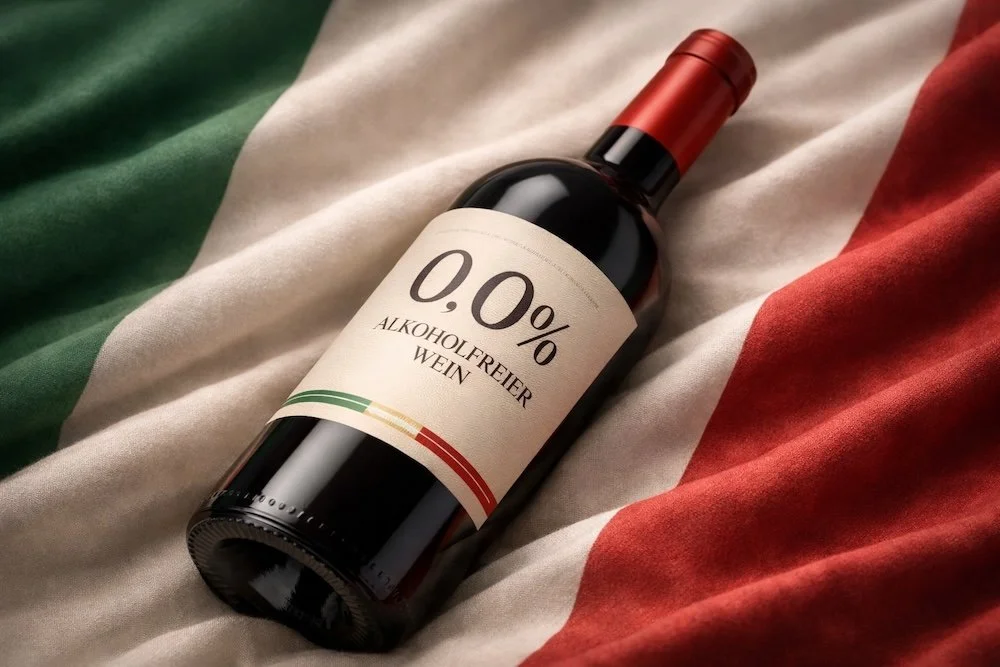
Italy has hesitated for a long time, but now it's official: dealcoholized wine may also be produced in Italy in the future. This was made possible by a new interministerial decree from December 2025, which clearly regulates the legal and tax framework for the first time. This brings Italy into line with other European wine-producing countries – albeit in its own, very controlled way.
Legal background: EU regulation since 2021, Italy now following suit
At the European level, dealcoholized wine has been permitted in principle since the reform of the Common Market Organization (CMO) in 2021.
The EU makes a clear distinction between two categories:
dealcolato: completely dealcoholized wine with a maximum alcohol content of 0.5% by volume
partially dealcoholized: partially dealcoholized wine with reduced alcohol content and more than 0.5% vol.
The prerequisite is always that it is genuine wine from which the alcohol is removed only after complete fermentation .
Italy had long failed to implement this EU regulation. The main obstacle was less ideological than practical: there was no national tax regulation, particularly in the area of excise duties. Without this, production in the country was effectively impossible.
The new decree: Why it is suddenly possible now
This gap was only closed with the joint decree issued by the Ministry of Agriculture and the Ministry of Economy and Finance.
Among other things, the decree regulates:
the tax treatment of dealcoholized wines
Permits and licenses
Storage, transport, and inspections
administrative duties for businesses
This means that the production of dealcoholized and reduced-alcohol wines is now legally possible in Italy for the first time. Previously, Italian brands often had to have their wines dealcoholized abroad—a clear competitive disadvantage.
What exactly is dealcoholized wine?
De-alcoholized wine is not grape juice and not a new drink, but rather traditionally produced wine from which the alcohol has been subsequently removed.
The process is clearly defined:
Grapes are harvested
The must ferments completely.
Only then does the dealcoholization process take place.
Only physical processes are permitted, no chemical interventions. The most important ones include:
vacuum distillation Alcohol is removed at low temperatures under reduced pressure to preserve aromas as much as possible.Reverse osmosis
The wine is filtered through membranes, alcohol and water are separated, and aroma components are then returned.Spinning Cone Column
A technically very complex process in which volatile aromas are first separated and then added back later.
Sensory-wise, this remains challenging—because alcohol is a key flavor carrier in wine.
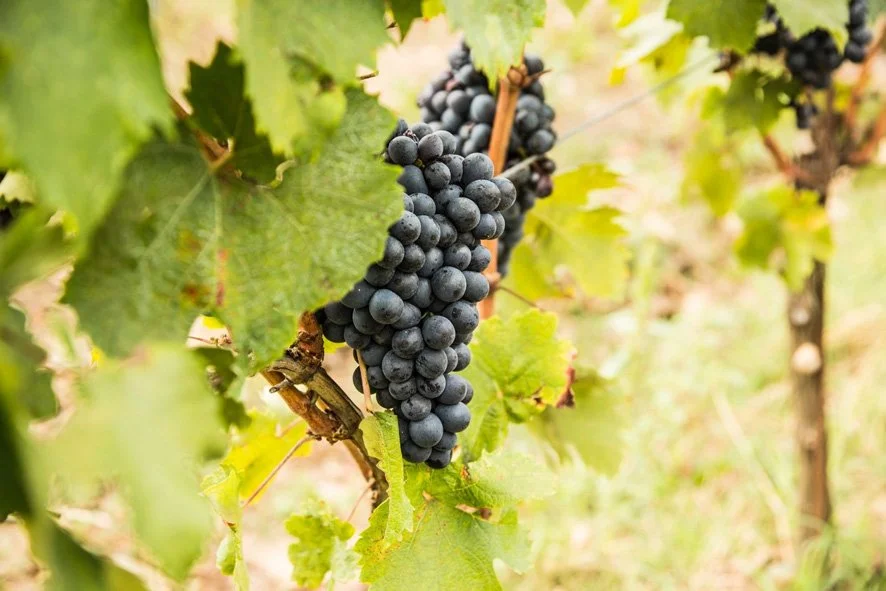
Grapes and wine remain the basis for low-alcohol wines.
Designations of origin remain protected
A key point of the Italian solution: protected designations of origin are excluded.
Specifically, this means:
no DOC, DOCG, or IGT wines
no names of origin
no terms such as Chianti Classico, Barolo, or Brunello
So there will be no alcohol-free Chianti Classico—at least not under that name. Italy is deliberately drawing a clear line here to avoid confusion and protect the system of origin.
NoLo wines: Why the segment is growing nonetheless
The term NoLo wines stands for No Alcohol and Low Alcohol and encompasses both alcohol-free and reduced-alcohol wines. This segment is growing worldwide—despite a generally difficult market environment in the wine sector.
Drivers include:
changed drinking habits
increasing health awareness
Demand in export markets such as the US, UK, Germany, and the Middle East
For many businesses, NoLo is not a substitute for traditional wine, but rather a strategic addition.
Political and cultural debate in Italy
The issue was hotly debated in Italy. At the end of 2024, Agriculture Minister Francesco Lollobrigida had publicly emphasized that dealcoholized products should not be labeled as wine. Under pressure from industry associations, a change of course was finally made—albeit with clear restrictions.
The Italian compromise can be summarized as follows:
De-alcoholized wine may be produced
Origin and identity remain protected
clear distinction between wine and dealcoholized products
My personal classification
"I think it makes sense to have non-alcoholic alternatives. Not every situation calls for alcohol, and good alternatives are important. For me, the question is rather whether you really have to call it wine."
What I've tried so far has often been interesting, sometimes good—but rarely really comparable to wine. For me, it's reminiscent of the discussion about vegan sausage or vegan Leberkäse: good products, yes—but the terms remain difficult.
I find the Italian approach all the more sensible: market liberalization yes, but without watering down the origin. This is not an attack on wine culture, but a clear distinction.